Background
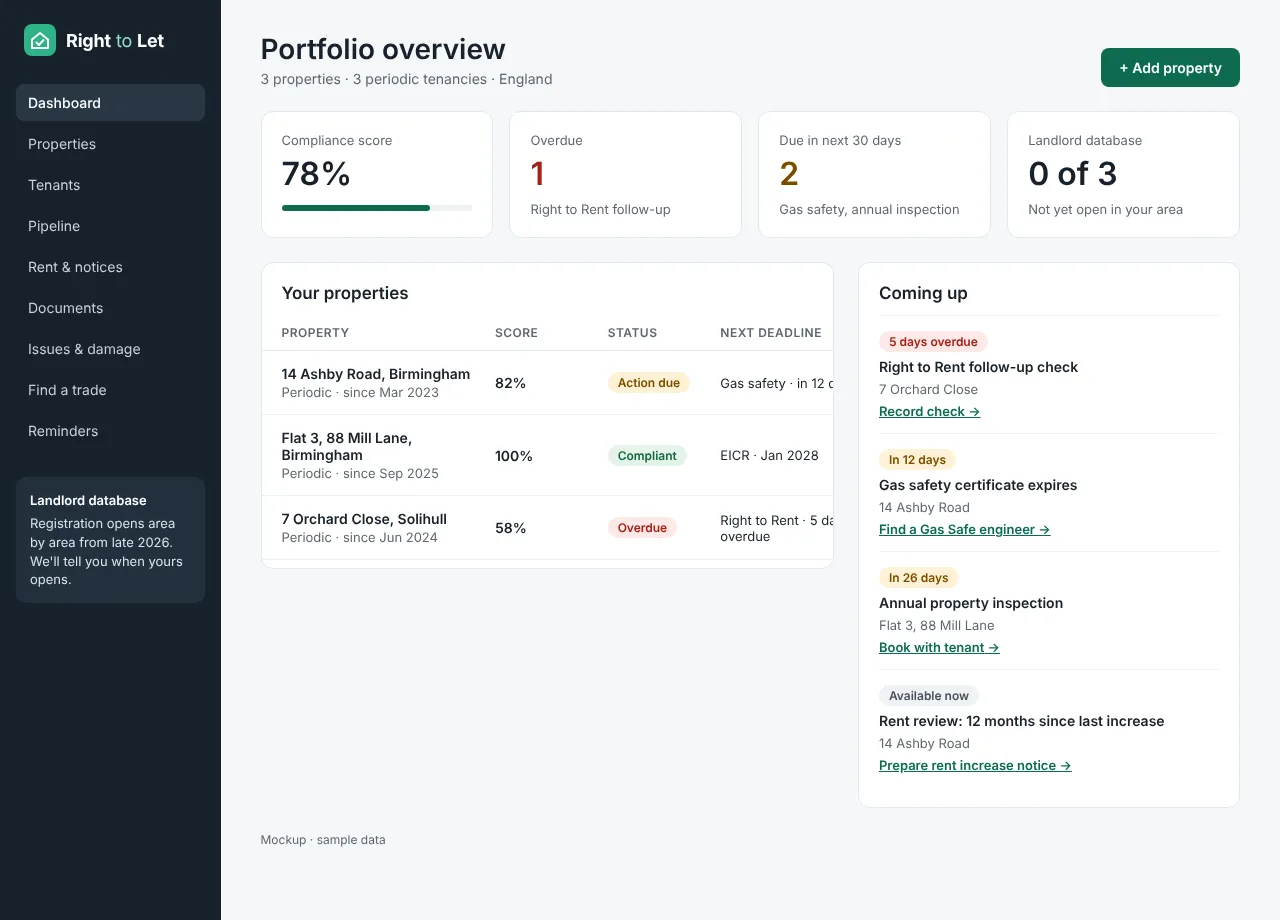
Right to Let is our new product for self-managing landlords in England. It tracks every certificate and deadline, prepares the legal notices, and keeps a time-stamped record of everything, so a landlord is covered if anything is ever questioned.
England’s private rental rules changed more in 2026 than in the previous 35 years. The Renters’ Rights Act 2025 abolished Section 21 evictions from 1 May 2026 and brought in new rules for raising the rent. A national landlord database is on its way, along with a new Ombudsman and Awaab’s Law on damp and hazards. Every one of these has a date and a penalty attached.
The product is in development and opens to its waiting list in early 2027. Its website, RightToLet.com, is live now with free tools any landlord can use today.
The Challenge
Most landlords with one to twenty properties manage them around a day job. Many are accidental landlords who inherited a house or kept a flat when they moved. They tend to search for help when a deadline frightens them, and they keep track of everything in their heads or a spreadsheet.
That approach was already fragile, and the new rules make it riskier:
- Rent increases now follow a strict process. The notice has to be on the right form, give enough notice and start on a valid date, or the increase doesn’t stand.
- Certificates expire on different cycles. Gas safety every year, electrical safety every five years, an EPC every ten, plus deposit protection, Right to Rent checks and local licensing.
- Disputes come down to evidence. Deposit deductions, repair complaints and Ombudsman cases are won or lost on what the landlord can prove, and when.
Reminder apps already exist, and some are free. We decided early on that reminders alone weren’t enough. Right to Let is built around the paperwork and the evidence.
What We’re Building
Right to Let is a multi-tenant web application in C# and Blazor on .NET 10, with SQL Server for data and Amazon Web Services for hosting and file storage. Payments and subscriptions run through Stripe.
| Area | What it does |
|---|---|
| Compliance tracking | A checklist and score for each property, with certificate uploads and a portfolio dashboard |
| Reminders | Email reminders before anything is due, and a weekly summary |
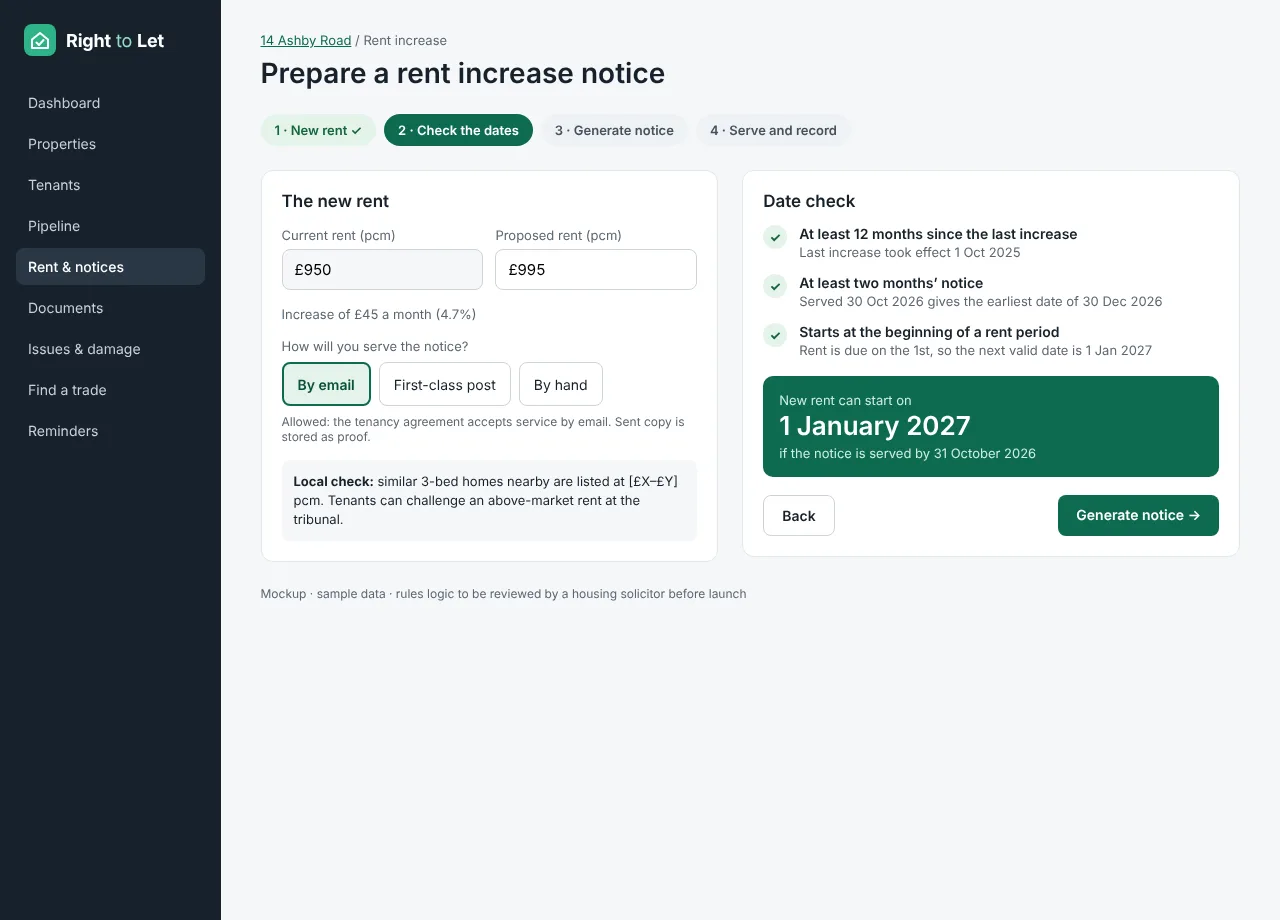
| Rent increases | A step-by-step wizard that checks the dates and fills in the official GOV.UK form |
| Documents and photos | A secure document vault and dated photo albums for inventories and inspections |
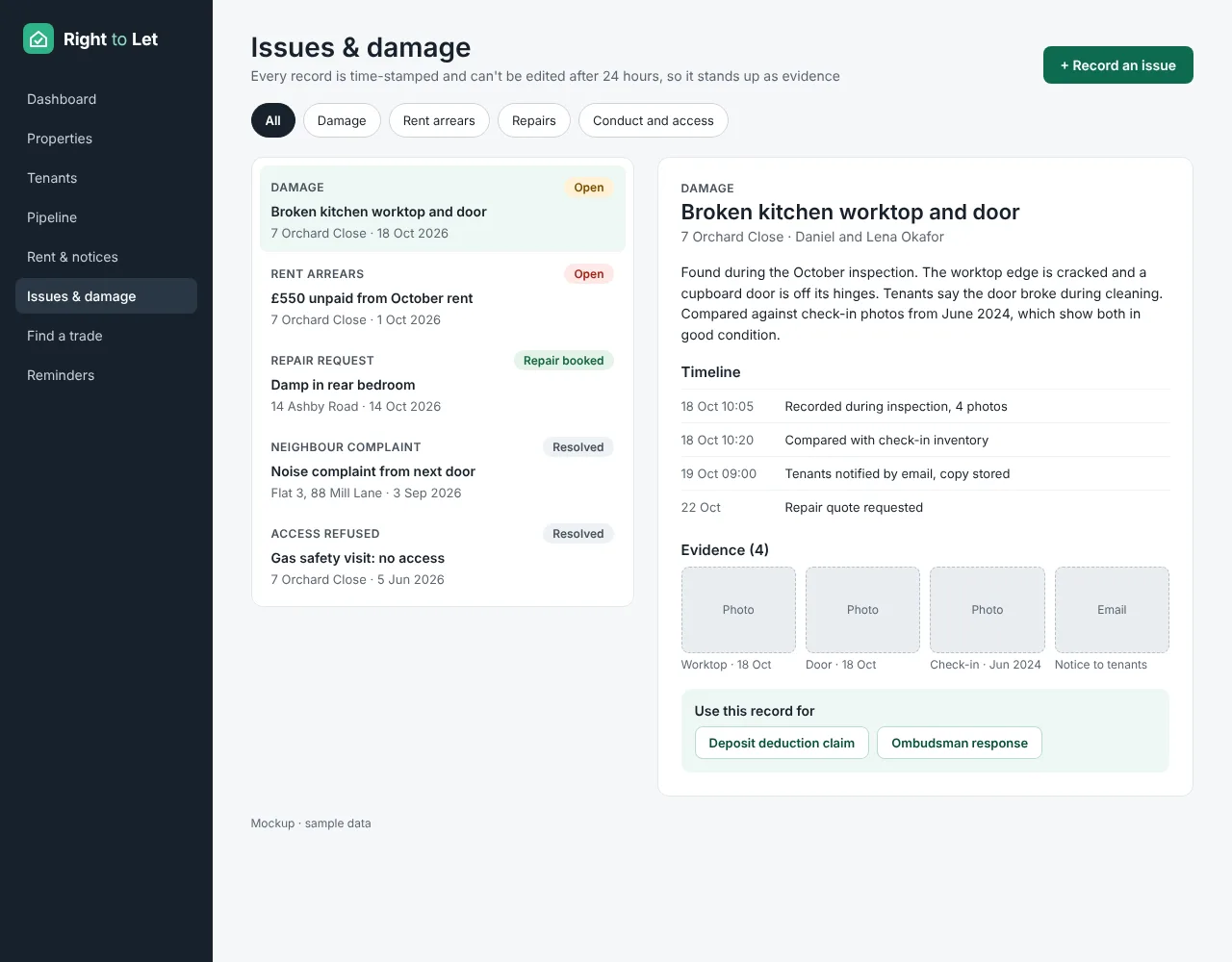
| Issues and damage | A log of damage, arrears, repairs and access problems that can’t be edited after 24 hours |
| Tenant repairs | Tenants report repairs with photos from their phone, without needing an account |
| Evidence packs | Everything about a property downloaded as one indexed file |
Key Technical Decisions
- The rules are data, not code. Notice periods, certificate cycles and other legal values for England live in a versioned rule set with effective dates. When a rule changes, the data changes and the history stays intact. The same rule data also checks the guides on the website, so a guide is flagged as soon as the rule it explains changes.
- Records that hold up when it matters. The issue log is append-only and locks after 24 hours. Photo dates come from the camera’s own data, and location details are stripped from thumbnails. An evidence pack is a single ZIP with an index and a SHA-256 hash for every file, so anyone can check nothing has been changed since it was downloaded.
- Nothing goes to a tenant until the landlord approves it. Right to Let prepares notices and messages, but the landlord always checks and sends them. It applies published rules and prepares standard documents; it doesn’t give legal advice.
- Each landlord’s data is walled off at the database level. SQL Server row-level security keeps every account’s data separate, even if a bug in the application asked for the wrong rows. Documents sit in private storage, are scanned for malware on upload and are only reachable through links that expire after a few minutes.
Pricing
Right to Let will be free for one property, for good. Paid plans for larger portfolios add text reminders, rent increase notices, the tenant repair app, the issue log and evidence packs, with a 30-day free trial. Prices for the paid plans will be confirmed before launch, and the plans are on the pricing page.
The Outcome
The website is live and already useful before the product opens. Landlords can take a free compliance check without signing up, read plain-English guides that each show when their facts were last checked, and look up licensing rules for 75 councils across the West Midlands and the East of England.
Right to Let opens to its waiting list in early 2027. Landlords can join the waiting list now, and tradespeople such as Gas Safe engineers and electricians can register their interest too.
For us, Right to Let plays to our strengths: a rules engine written in C#, a self-serve subscription product, and the search-led content approach we have used for years on our job boards. Right to Let is an independent service and is not affiliated with the Home Office or any government scheme.
You can find out more at www.righttolet.com.
Built for the Renters' Rights Act
Free for one property
Opening early 2027
Other Projects
Bristol Jobs
A regional job board platform serving the Bristol and South West employment market with targeted local recruitment.
Jobs Cast
A modern job board platform connecting employers with candidates through intelligent search and automated matching across multiple sectors.
Family Announcements
A community publishing platform for family milestones including births, marriages, and memorials, serving regional newspapers.